For Surgeons


Effective Solution for Chronic Acid Reflux


DOWNLOAD
To download animation, right-click link above and select 'Save As'

Get the Latest News


Frontline surgical management of GERD

TIF (Transoral Incisionless Fundoplication) with EsophyX is an innovative, clinically-proven and completely incisionless surgical approach to treating gastroesophageal reflux disease (GERD). The procedure reconstructs a robust antireflux barrier at the gastroesophageal junction to restore it to what is believed to be its natural anatomical geometry.The procedure is based on the long-established principles of conventional GERD surgery like laparoscopic Nissen fundoplication, but it is only minutely invasive, more versatile, and free of the chronic complications (e.g., chronic dysphagia and gas bloat syndrome) commonly associated with conventional procedures. This significantly lowers the hurdle to a patient's having GERD surgery performed, and also allows for earlier intervention of the disease.

TIF also mirrors the outcomes achieved by conventional GERD procedures. There is considerable long-term clinical data showing that conventional procedures achieve effective control of reflux.1 Recent clinical studies of TIF show that 85% of patients are still heartburn free and 79% are still off daily PPIs at two years.2

For the first time, TIF enables surgeons to operate transorally under endoscopic guidance to create a tight, durable GE (gastroesophageal) valve while adhering to all the basic principles of conventional GERD surgery.

  • Wrap a portion of the fundus around the lower esophagus
  • Restore/lengthen intra-abdominal esophageal length
  • Recreate the angle of His
  • Augment high-pressure zone of esophagus
  • Reduce hiatal hernia ≤ 2 cm

Procedure overview:
EsophyX2 unit

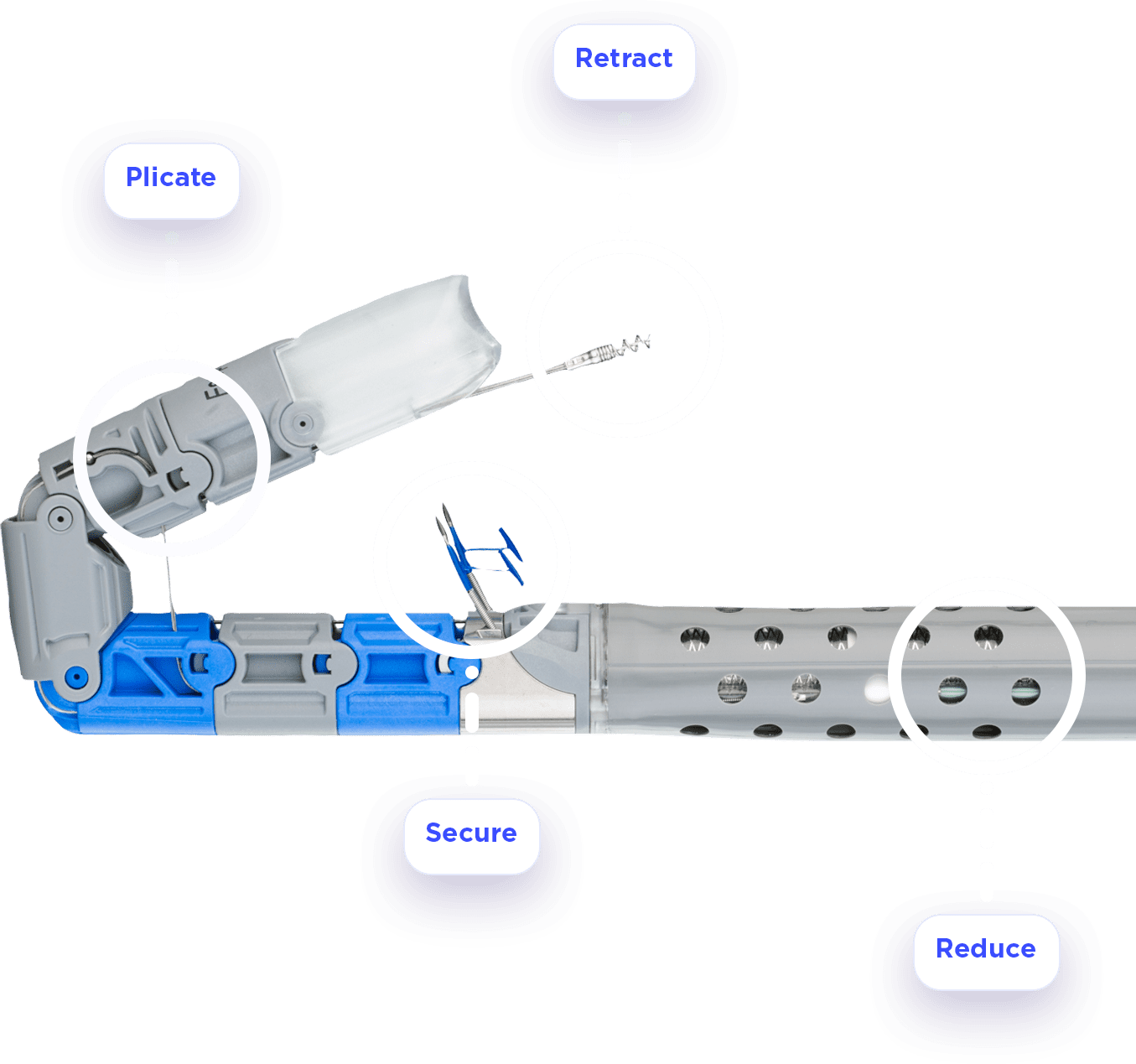
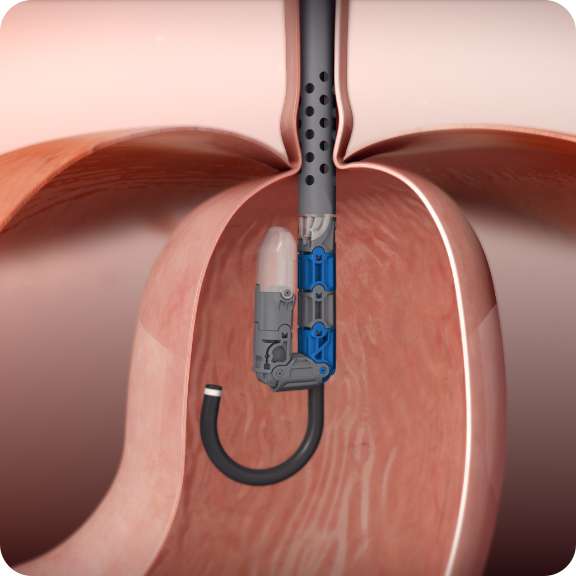
The TIF procedure is an innovative form of “incisionless” transoral natural orifice surgery, or NOS for short, providing a giant leap in the evolution of the treatment of GERD. The EsophyX surgical device is introduced into the patient’s body through the mouth, not through an abdominal incision, and is used to correct the root cause of GERD, an anatomic deficiency at the gastroesophageal junction.

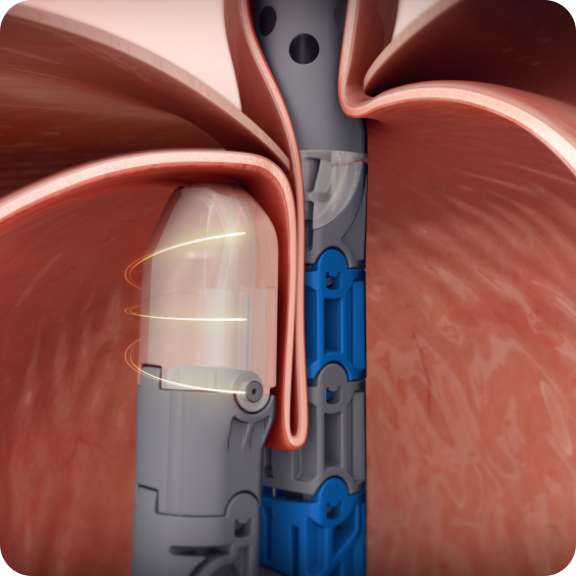
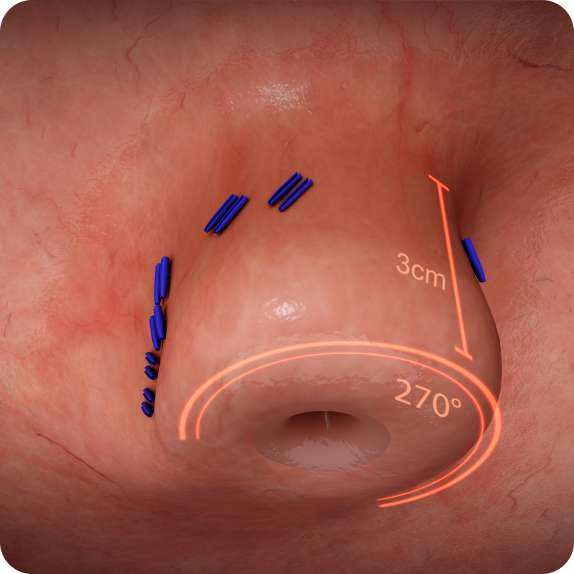
Under visual guidance of an endoscope, the TIF procedure reconstructs the antireflux barrier and restores the competency of the gastroesophageal junction, resulting in the effective elimination of GERD. TIF achieves:

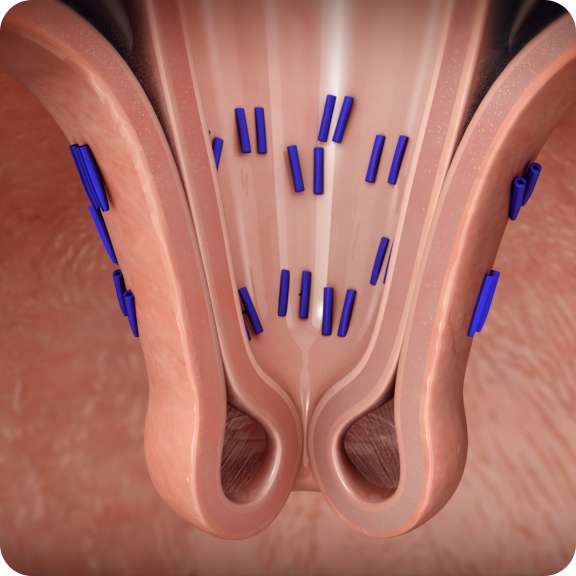
  • 270˚-310˚ Omega-shaped valve, 3-5 cm in length
  • Restored angle of His
  • Reduction of hiatal hernia ≤ 2 cm
  • Serosa-to-serosa fusion
  • Use of proprietary fastener technology that mirrors results of proven surgical suturing technique

TIF is the first procedure that provides an incisionless anatomical solution to a disease that today is typically treated with acid antisecretory medications, either PPIs (proton pump inhibitors) or H2 blockers (histamine receptor antagonists). But GERD is a progressive disease, and the pharmaceuticals typically lose their effectiveness over time. GERD sufferers today are also concerned about the well-known adverse effects of long-term use of PPIs, including osteomalacia (inadequate absorption of calcium and other minerals into the bones, essential to bone health). Since pharmacological therapy does not treat the underlying root causes of reflux, the deteriorated anatomy of the antireflux barrier, life-long medication therapy is required. Add to all that such lifestyle changes as special daily diets and pill regimens and having to reduce or eliminate activities like playing sports.

Adults suffering from GERD who no longer respond adequately to pharmaceutical treatments have the option of laparoscopic GERD surgery, which has long proven very effective in treating the disease. But because the procedure is so invasive, despite the laparoscopic approach, fewer than 1% of GERD sufferers elect to have the surgery performed.

Pre-op & post-op TIF GE valve illustrations.
Pre-TIF dysfunctional GE valve.
 
Post-TIF reconstructed GE valve.

Though the TIF procedure (with the EsophyX device) is closely based on the well-established principles of conventional GERD surgery, it is truly “patient friendly” and typically is performed in under one hour. There are no external incisions or internal dissection. Most patients go home the next day and return to normal activities within a few days.


GERD spectrum


How the TIF procedure works:

Step 1 Step 2 Step 3
Step 1: The EsophyX device enters the esophagus through the mouth and is positioned at the junction of the stomach and esophagus. Step 2: The EsophyX device pulls and fastens a tissue fold. Step 3: Step 2 is repeated multiple times to reconstruct a robust, tight valve that prevents the reflux of stomach contents up into the esophagus, resulting in the effective elimination of GERD.
Before EsophyX TIF 12 Months After EsophyX TIF
Before TIF Procedure
12 Months After TIF Procedure

Recent published clinical results support long-term safety and efficacy of TIF

A recent two-year study of TIF conducted at Centre Hospitalier Universitaire St. Pierre, Brussels, Belgium, by Professor Guy-Bernard Cadiére confirmed the procedure’s long-term safety and efficacy. The results of the study were published in the March 14, 2009, edition of Surgical Endoscopy, which showed stability of the TIF-created valve and resultant long-term improvement in the patients’ symptoms. At two years after TIF1 (first generation of the TIF technique), patients reported having experienced cessation of heartburn, elimination of daily pharmaceutical therapy (PPIs), and improved quality of life superior to pharmaceutical therapy. Key trial results include:

  • 93% of patients reported a cessation of heartburn
  • 79% of patients were completely off daily PPIs
  • 64% of patients had a ≥ 50% improvement in GERD HRQL (health related quality of life) scores compared with baseline on their PPIs
  • 79% of patients experienced a complete cure or remission of their GERD
  • 86% of patients were satisfied with TIF
  • At 2 years no adverse events related to TIF were reported

Benefits of the TIF procedure:

  • Effective and patient-friendly
    • Effective, long-term solution to GERD
    • Eliminates heartburn in over 85% of patients
    • Gets 79% of patients off PPIs 2 years after the procedure
    • No external incisions and no internal dissection minimizes patient discomfort and shortens recovery
    • Allows for earlier intervention
    • Improves quality of life score by 64% over PPIs
    • Reduces hiatal hernia in 89% of patients
  • Safe and atraumatic
    • No long-term complications reported to date
    • Flexible shaft for atraumatic insertion
    • Incisionless transoral insertion reduces/eliminates risk of infections and incisional herniation
  • Customizable to patient needs
    • Delivers an unlimited number of fasteners with a single insertion to meet the needs of each individual anatomy
    • Adjustable and/or revisable transorally to preserve future treatment options
    • Minimizes patient downtime. Most patient can return to work and normal activities in as little as one da

Compares favorably with other surgical treatments for GERD

As Nissen procedures continue to decrease and the market demands a minutely invasive solution, the TIF procedure provides the perfect patient-friendly, low-risk solution.

EsophyX vs Nissen Comparison

What results should the patient expect from the TIF procedure?

Results vary from patient to patient, but the experience to date indicates patient results similar to those provided by conventional antireflux surgical procedures.

Indication:

The EsophyX device is FDA cleared for endoluminal, transoral tissue approximation, full-thickness plication and ligation in the GI tract and is indicated for the treatment of symptomatic chronic gastroesophageal reflux disease (GERD) in patients who require and respond to pharmacological therapy. It is also indicated to narrow the gastroesophageal junction and reduce hiatal hernia ≤ 2cm in size in patients with symptomatic chronic gastroesophageal reflux disease.

SerosaFuse® Fasteners:

SerosaFuse Fastener
SerosaFuse fastener
  • Made of non-resorbable polypropylene, equivalent web strength to 3.0 suture
  • Holds full-thickness serosa-to-serosa plications to enable serosal fusion
  • H-shaped, open-ended fastener design, not likely to surround and trap nerves or blood vessels
  • Larger than stylet (reduces the incidence of bleeding)
  • Non-resorbable, continues to hold
  • Proof of concept — 2-year follow-up on SerosaFuse fasteners3

1 Watson LW. Endoscopic Antireflux Surgery: Are We There Yet? World Journal of Surgery 2008 April 23.

2 Cadière GB, Van Sante N, Graves JE, Gawlicka AK, Rajan A. Two-year results of a feasibility study on antireflux transoral incisionless fundoplication (TIF) using EsophyX. Surgical Endoscopy 2009; 23: 957-964.

3 Serosa-to-serosa plications and 2-year durability testing with SerosaFuse fasteners inserted with EsophyX device.

Other TIF (with EsophyX) information:

How do I arrange an in-service meeting with my local EGS sales representative:

Either click the Request Info button below or call (650) 226-2200 to arrange an in-service meeting with your local EGS rep.

How do I get trained on the TIF procedure :

We offer a selection of TIF (with EsophyX) training course dates and locations. Either click the Request Info button below or call (650) 226-2200 to contact you local EGS rep to arrange training.

Patient brochure downloads:

Surgeon brochure downloads:


NP01931-01A